Advanced Tax Calculation Tools Support & Setup Guide for Real Estate Professionals |
Overview
This new feature now includes a comprehensive set of tax calculation tools designed to support regions with complex real estate tax requirements, including New Mexico, Hawaii, and Canada. These enhancements allow you to calculate taxes automatically, manage local tax rates, automate tax voucher creation, and generate reports that track tax owed by location.
Methods for Calculating Tax Collected
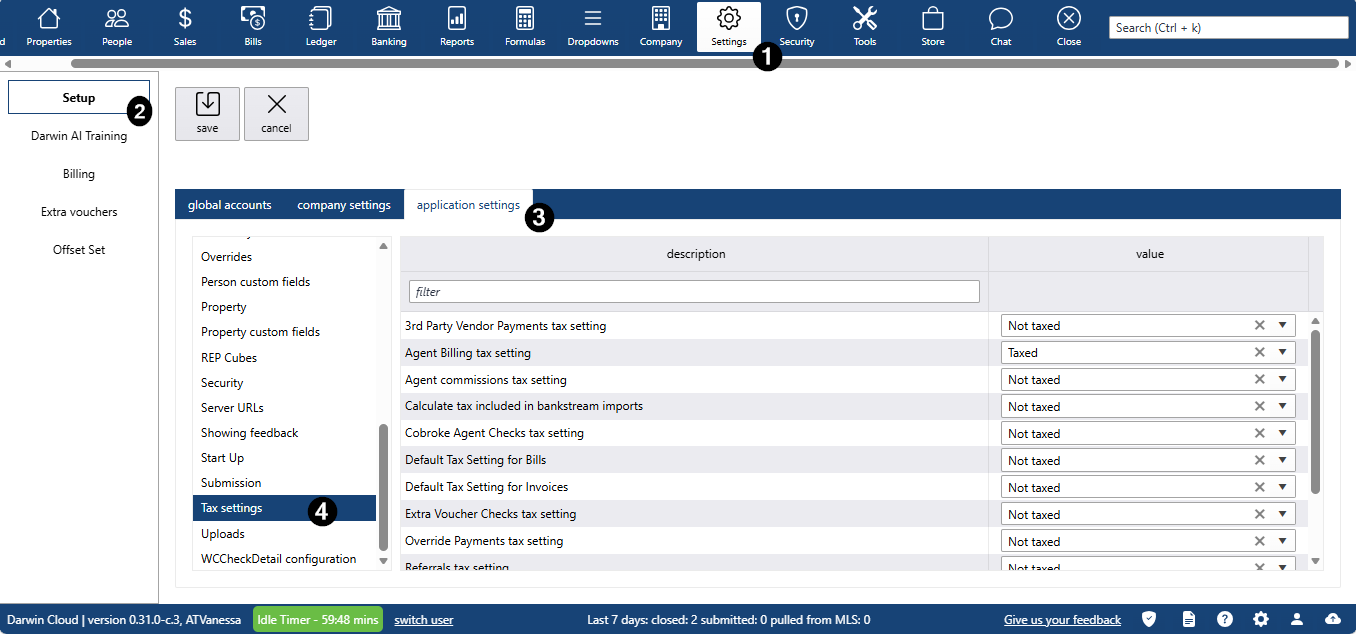
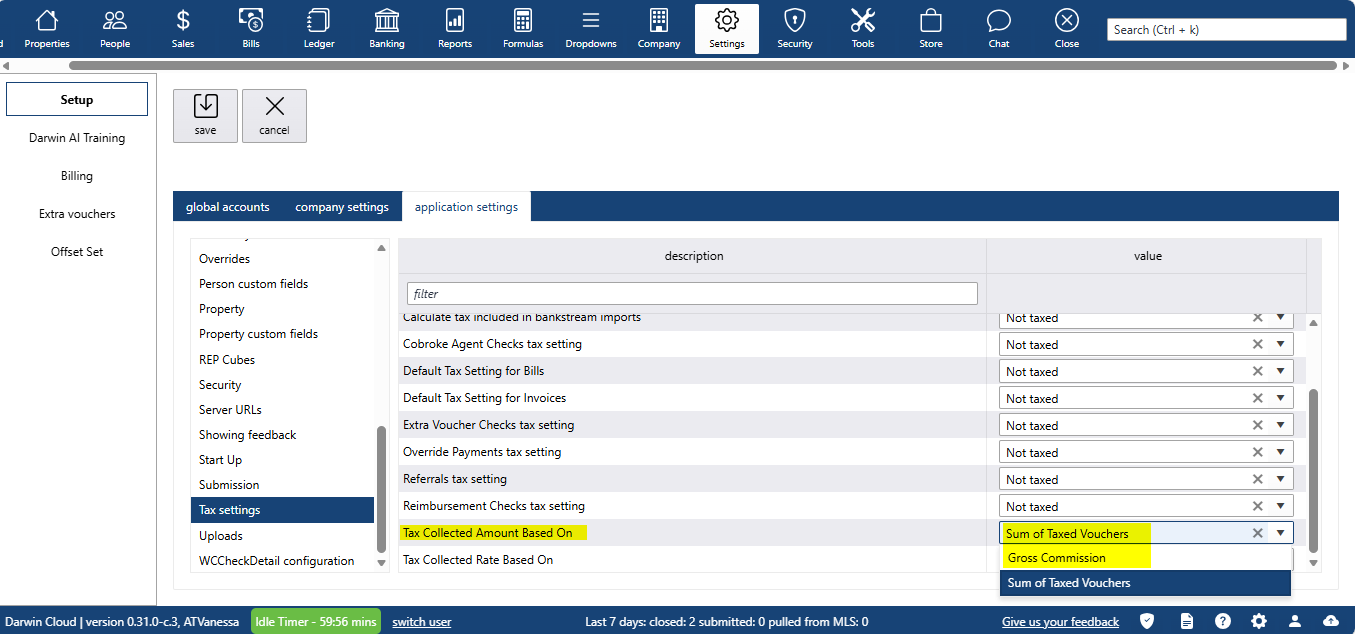
You can choose how the system calculates the "Tax Collected" amount for each transaction. This setting is found at:
Settings → Setup → Application Settings → Tax Settings
| Calculation Method | How it Works |
|---|---|
| Gross Commission | Calculates tax based on the total commission for the transaction. Best for: jurisdictions where tax applies to the full transaction value. |
| Gross Commission + Transaction Fees | Calculates tax based on the total commission income and transaction fee income. Best for: jurisdictions where tax applies to all income collected during a transaction. |
| Sum of Taxed Vouchers | Calculates tax only on vouchers that are not marked tax-exempt. (Default setting) Best for: jurisdictions where only certain payouts are taxable. |
Methods for Determining the Tax Rate
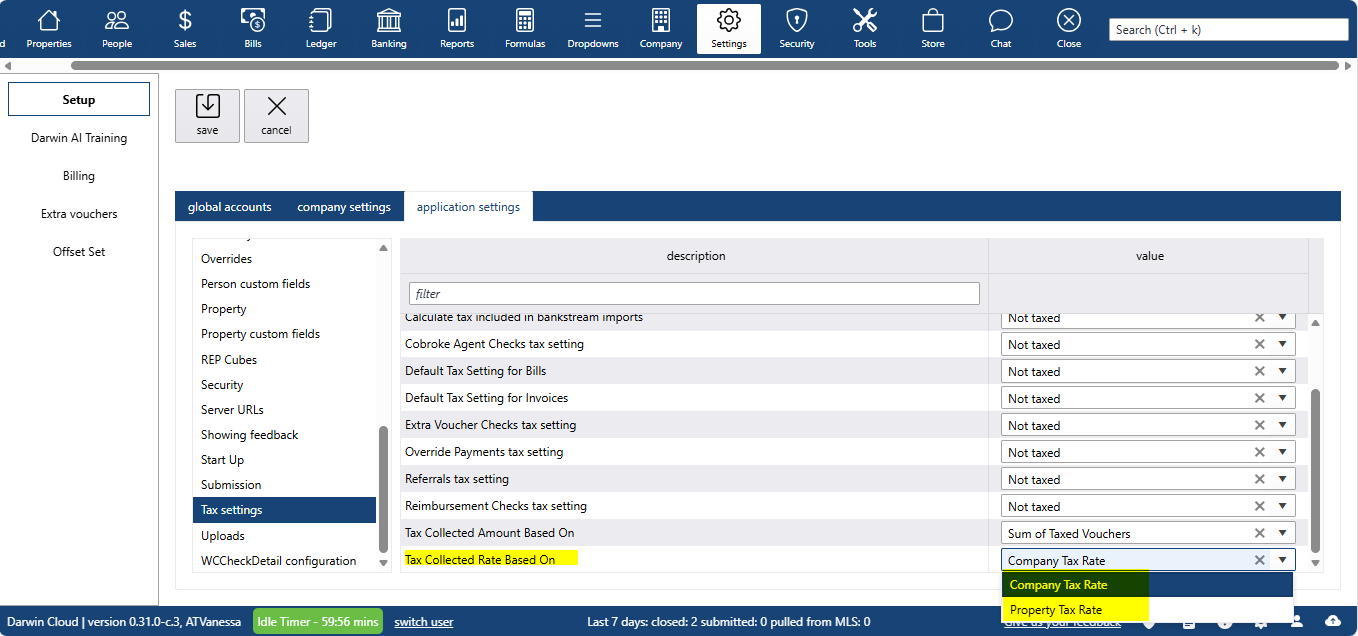
You can also choose where the tax rate comes from for each transaction:
| Tax Rate Source | How it Works |
|---|---|
| Company Tax Rate | Applies your company's default tax rate to all transactions. The Company Tax Rate is defined on the Company > Company screen for each individual company in the database. |
| Property Tax Rate | Applies the tax rate tied to the property's specific location code. Location codes are set up and modified in Dropdowns > Properties > Location Codes. |
Tax Voucher Features
darwin has additional tax settings that determine which payees on transactions receive a tax voucher as part of their payment. The default voucher creation settings are located under Settings > Setup > Application Settings > Tax Settings.
For each person type, users can select the option "Taxed" or "Not Taxed"
| Setting | How it Works |
|---|---|
| Taxed | A tax voucher is automatically created for people of this payee type on transactions |
| Not Taxed | A tax voucher is NOT automatically created for people of this payee type on transactions For the tax calculation setting "Sum of taxed vouchers," the tax collected calculation will exclude earnings for this person type by default |
When a person type is set as "Taxed," the darwin will automatically create a tax voucher as part of their payment.
- For agents, the tax voucher appears in a separate payment record on the Property > Post screen. This allows users the option to retain the agents' portion of the tax if the company pays the tax on the agents' behalf.
- For cobrokes, referrals, and other vendors, the tax is included as a line item on the payment voucher, and is reflected in the total payment amount.
Other Tax Settings
The tax settings also determine whether payments that are not part of a real estate transaction are taxed.
| Setting | How it works |
|---|---|
| Agent Billing tax Setting | Determines whether tax will be assessed on agent bills Tax rates and exemptions for individual charges can be set up on the screen Settings > Billing |
| Calculate tax included in bankstream imports | When a bill is imported to darwin using bankstream, the total amount will be separated into the base amount and the tax. The tax will be calculated using the company tax rate. |
| Create voucher for tax owed by company | For real estate transactions, a tax voucher will be created based on the amount of tax owed by the company. |
| Default Tax Setting for Bills | Payables created in darwin will be taxed by default Line items on individual payables can be marked as "tax exempt" as needed. |
| Default Tax Setting for Invoices | Invoices created in darwin will be taxed by default Line items on individual invoices can be marked "tax exempt" as needed |
| Vendor for company tax vouchers | For companies that automatically create a tax voucher on real estate transactions, this setting indicates the person record that should be used for these vouchers. |
Support Guide
Answers to common questions about the new tax features.
1. What's the difference between calculating taxes on gross commission versus vouchers?
The voucher method calculates taxes based on the vouchers being paid out, such as agent commissions, referrals, and similar items. The gross commission method calculates taxes on the total commission amount for the property, regardless of how it is distributed. The settings allows users control over which vendors receive tax vouchers, while ensuring you collect the correct total tax amount required by your jurisdiction.
2. Do I have to manually enter tax rates for every property?
When using the Property Tax Rate method, you will need to select a location code for each transaction. A dropdown menu provides all available tax rates for locations that have been set up in your software. Simply select the appropriate location code for the property, and the system applies the correct rate automatically.
Your office should update these rates as they change to keep them current. Location codes are managed on the Dropdowns > Properties > Location Codes screen of your software.
3. Will this affect my existing transactions?
No. Your existing transactions will continue to process exactly as they do today. The new features are optional settings that you control. Once you switch, only new transactions will use the updated calculation method. All historical data remains unchanged.
4. What if I select the wrong location code for a property?
You can change the location code on the commission screen before posting the transaction. If the transaction has already been posted, adjustments can be made through the standard correction process. The system records which location code was applied to each transaction so you can always review what was used.
Important Notes
| Requirements & Restrictions |
| Users are responsible for entering and maintaining the list of regional taxes relevant to their area on the Location Codes screen. AccountTECH can assist with loading local tax data provided by users, but clients are responsible for the accuracy of the data provided. |
| Location codes must be unique — duplicate codes are not permitted. |
| Tax rates can be stored with up to four decimal places. |
| Properties cannot be assigned a deleted location code. |
| Posting will be blocked if required tax data is missing from the transaction. |